Dexter & Sugar
Order made yours.
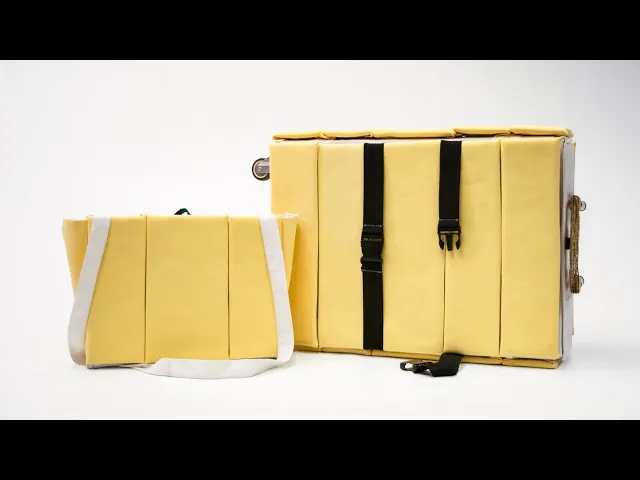
Dexter & Sugar are two pieces of luggage designed to adapt to the needs of every traveler. Dexter, a 3-in-1 suitcase, is perfect for medium to long-distance travel; Sugar, a compact bag, is the ideal companion for everyday commuting. Together, they offer an educational experience that simplifies independent packing and management.
PROJECT LINEUP
Group of five people.
ROLE
Market research, concept generation, development, prototyping, presentation.
BRIEF
Helping neurodivergent users in the organization of their personal belongings during short commuting or long distance travel.
NOTES
The project was developed as a group for the Laboratorio di Metaprogetto (Metadesign Laboratory) and is featured on Open COmeta, a shared project platform for people with autism with the partnership of Fondazione Trentina per l'Autismo.
Moreover, Sugar was selected for the Design x Designers exhibition (Campus Bovisa), a satellite event of the Interdependence initiative, organized during Design Week 2025 by Politecnico di Milano.
The course focused on Metadesign. Therefore, the output was a design concept, with no further production details.
Research & Analysis
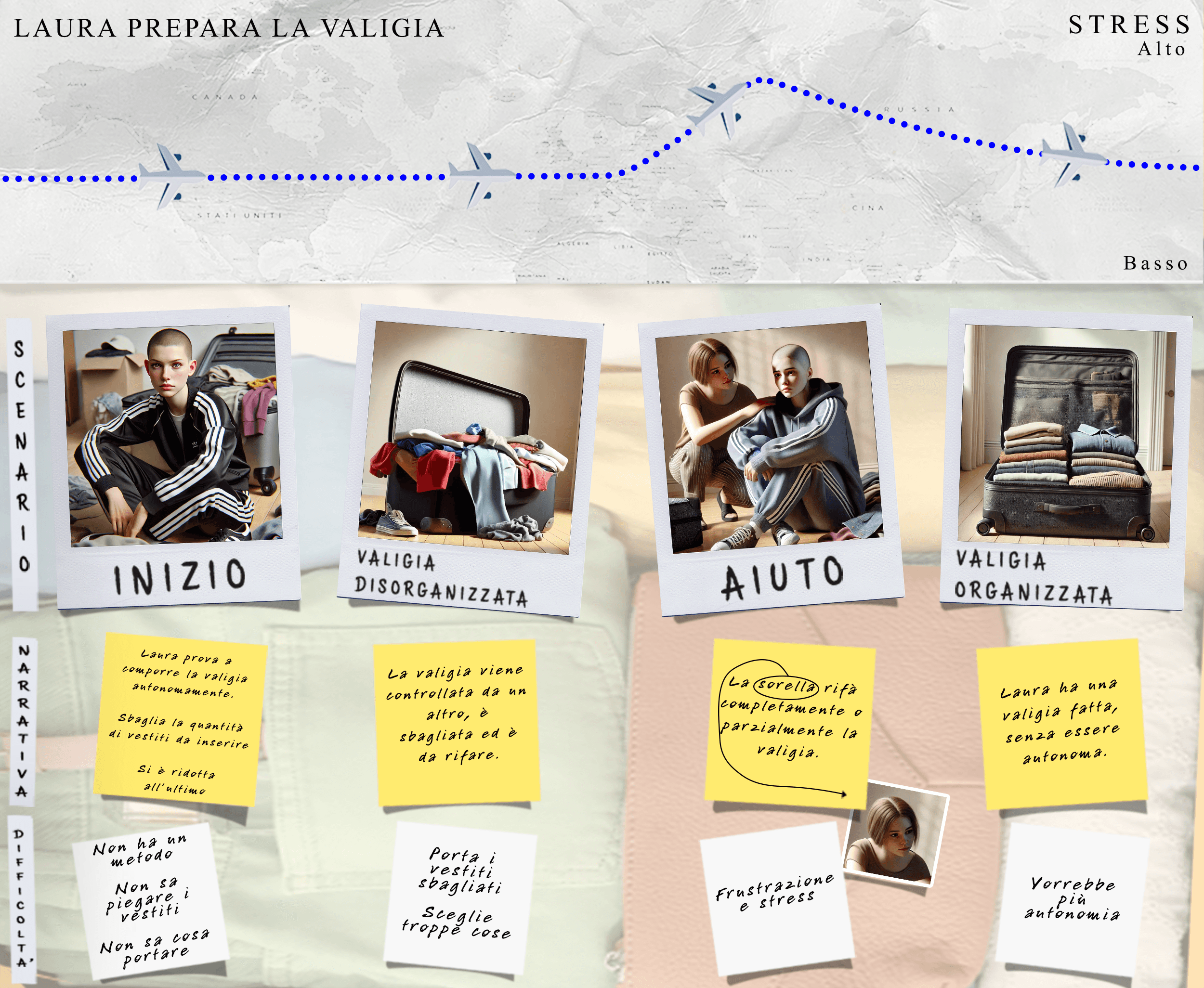
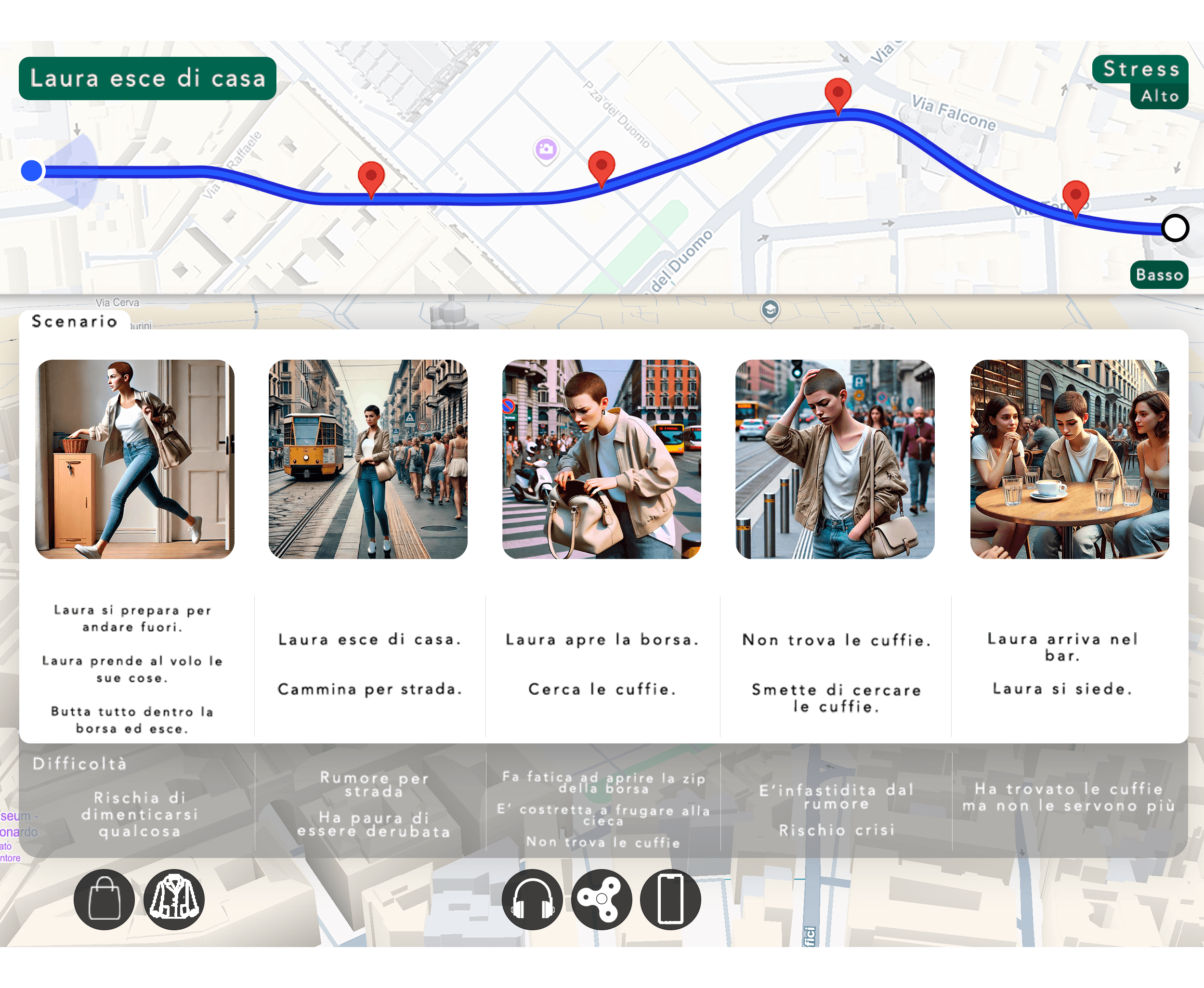
The entire product development process was based on Laura, a 25-year-old neurodivergent woman who:
Despite a good level of independence, struggles with organizing everyday items and travel clothes.
Suffers from dyspraxia (difficulty in handling small objects and closures, like buttons and zippers) and tactile hypersensitivity.
We created Laura's character based on an interview of a real autistic person.
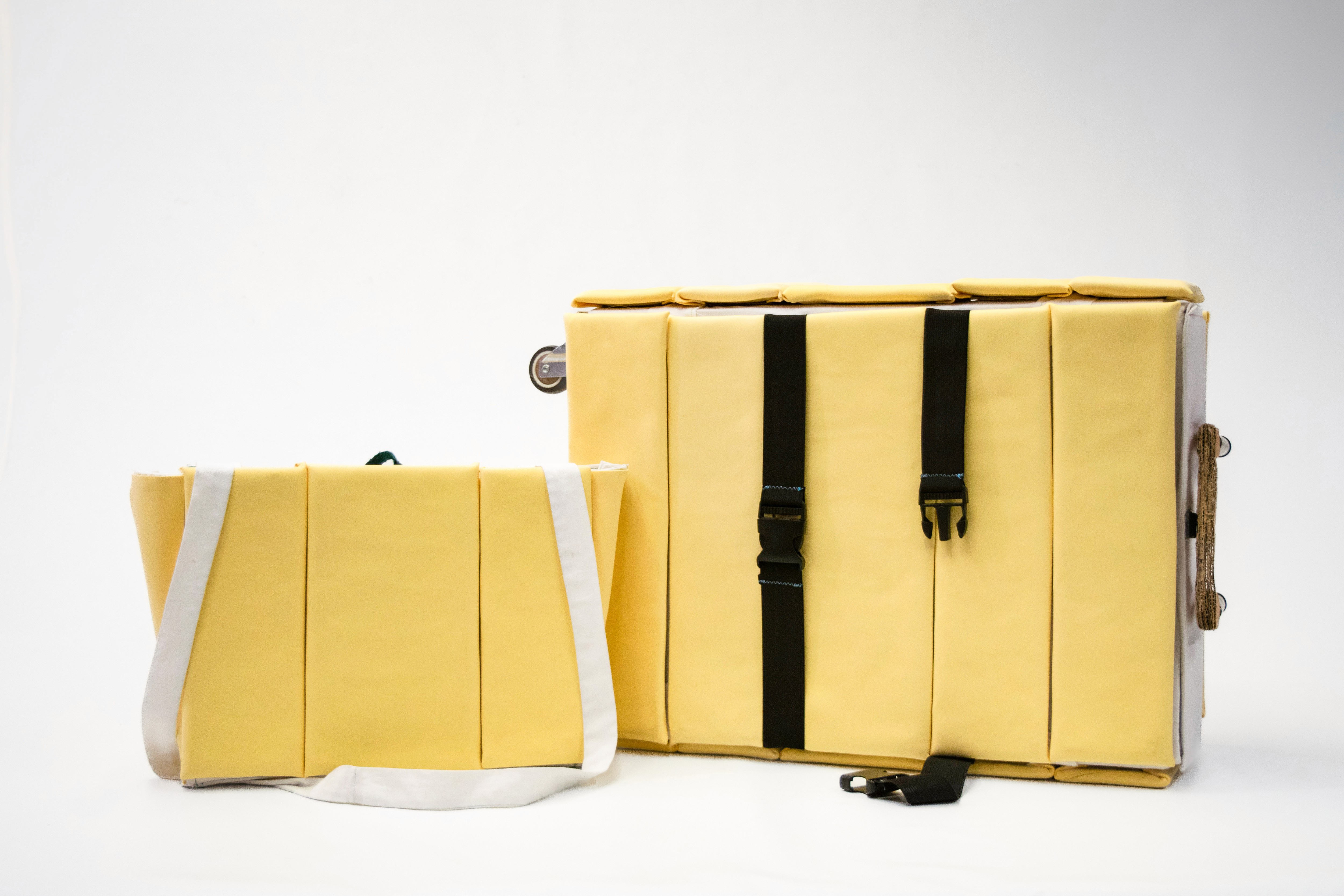
The project started by exploring the products on the market linked to personal organization.

Concept Generation
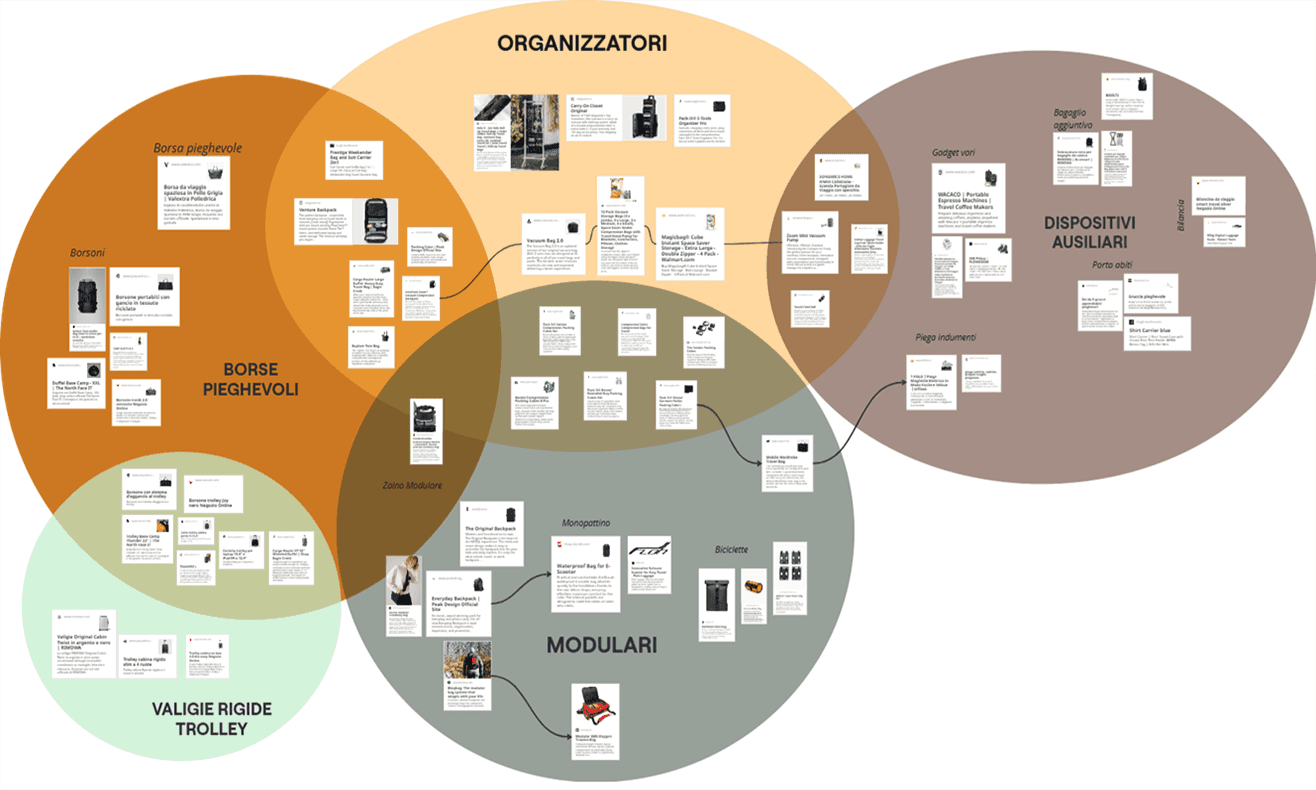
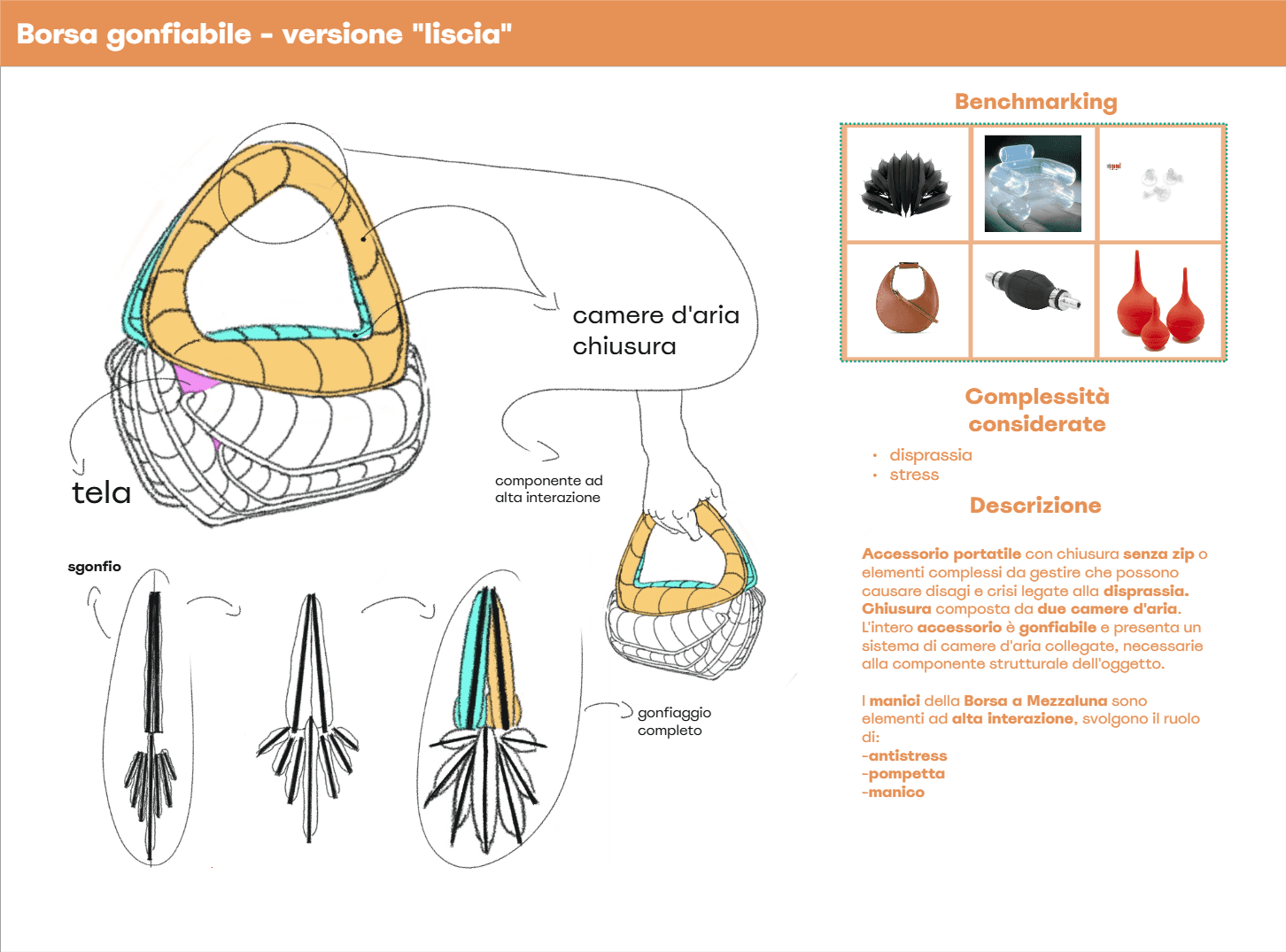
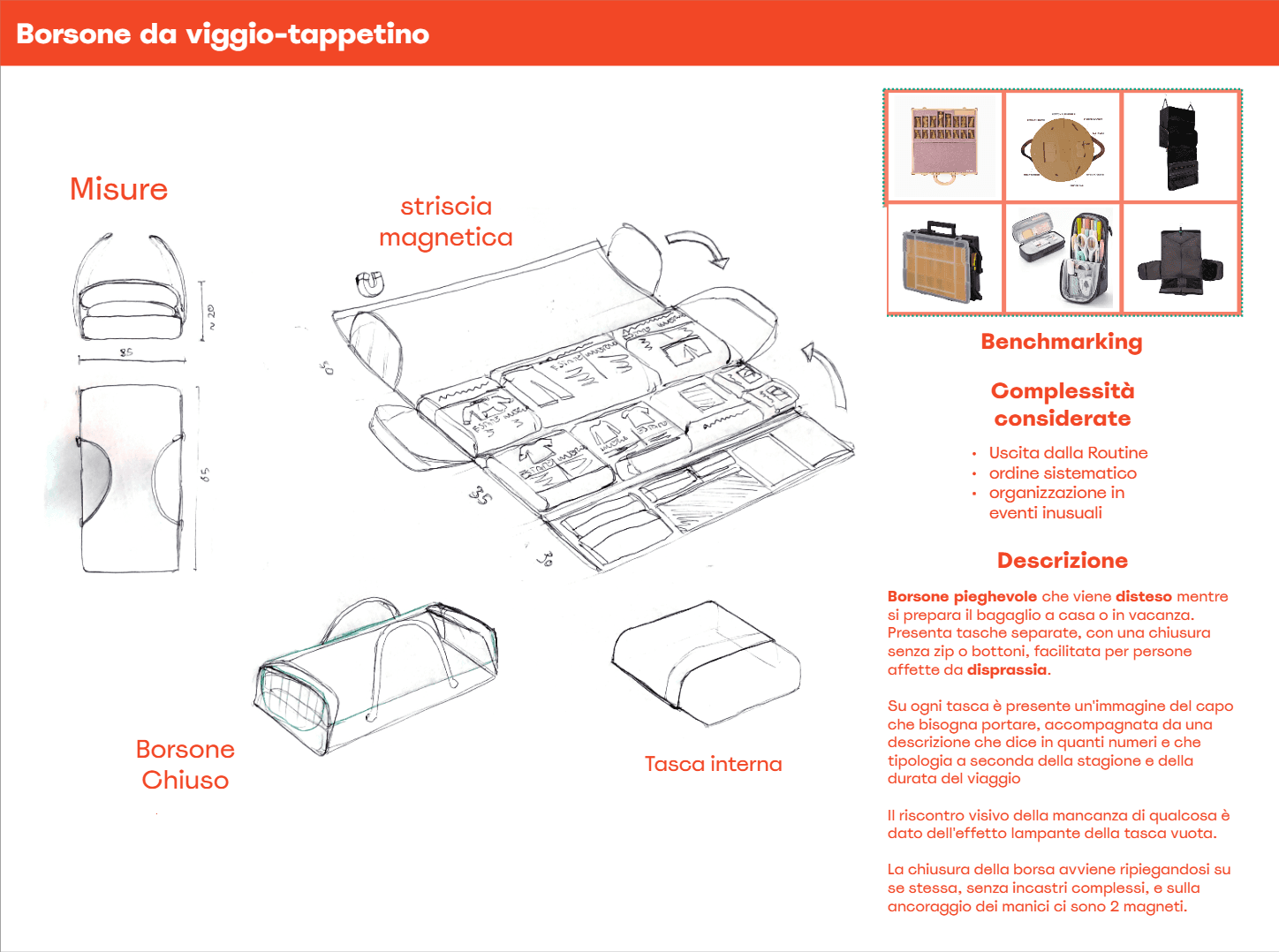
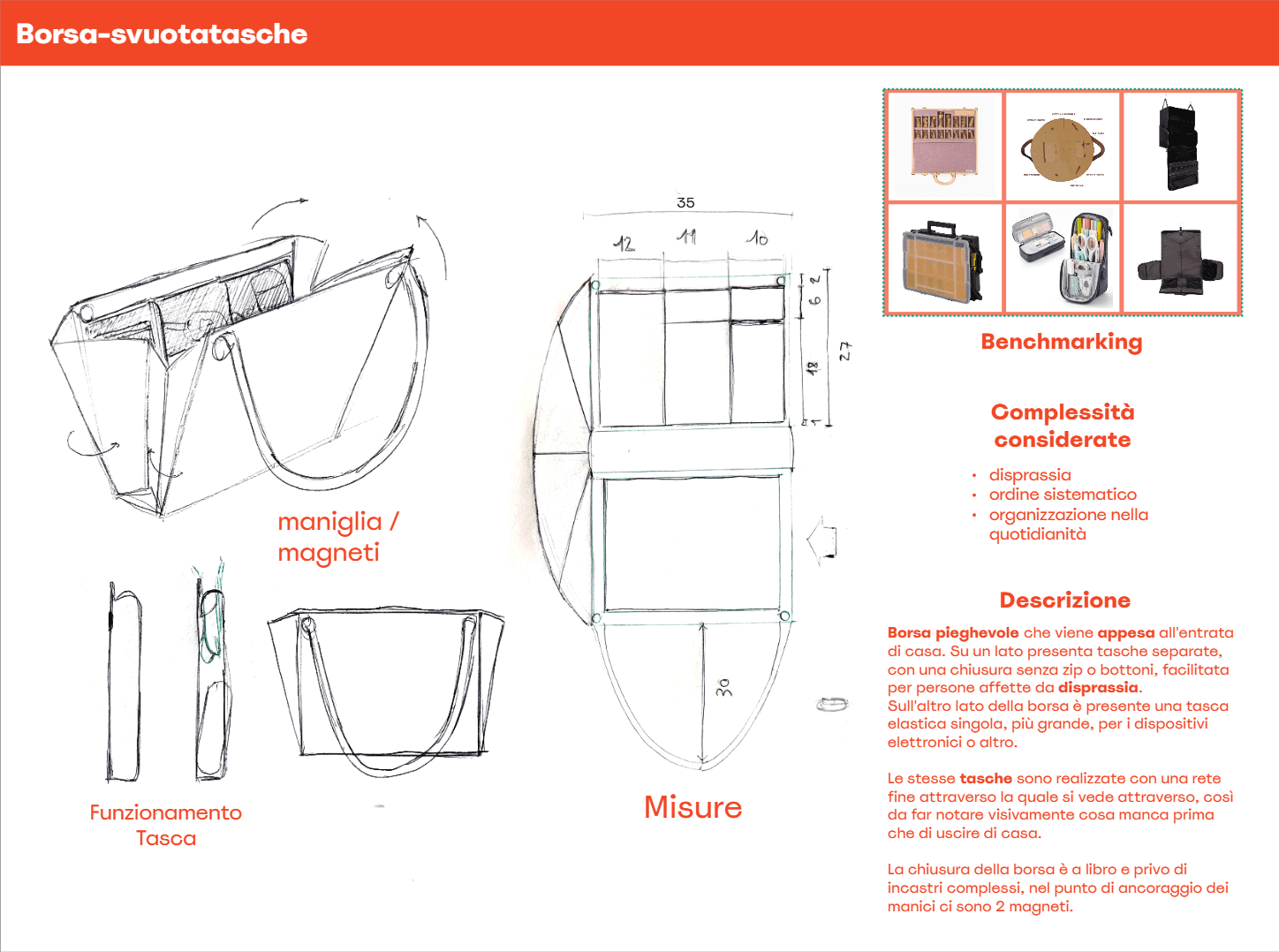
We then proceeded by designing some ideas, through a collective Crazy Eight activity. Just two ideas made it to the end and we found ourselves at a crossroad: developing either an inflatable handbag or an unfoldable bag/luggage system. We went for the second option and created two journey maps to better define our final goal.
Mission
Facilitate planning and organizing objects by seeking guided autonomy
Help create a personal, non-imposed schedule
Accessible and secure closures
Repetitive, reassuring design with soft finishes
Clear, schematic internal layout
Option to customize the outer material, responding to different levels of hypo- and hypersensitivity
Sugar
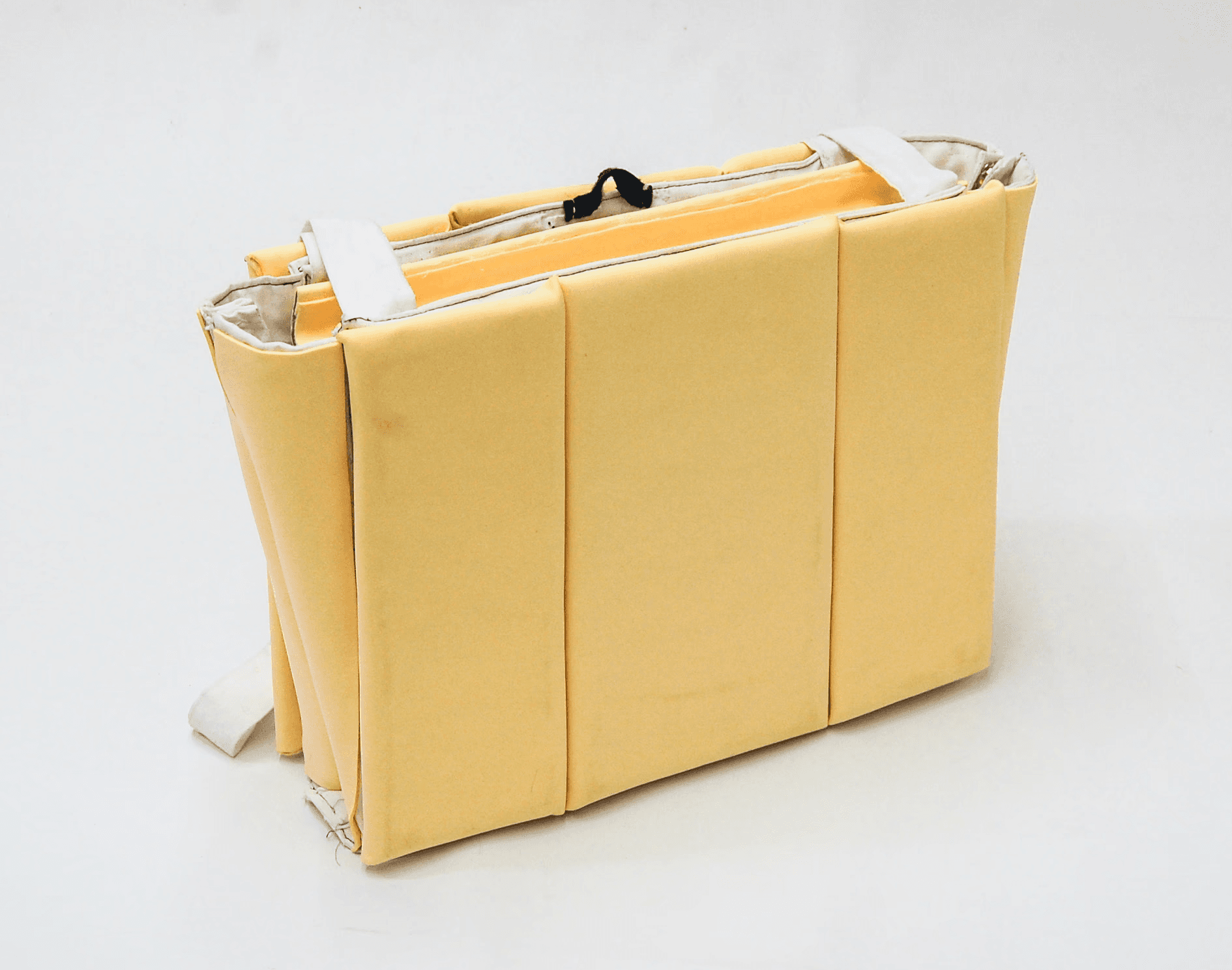
Bi-fold bag
Features
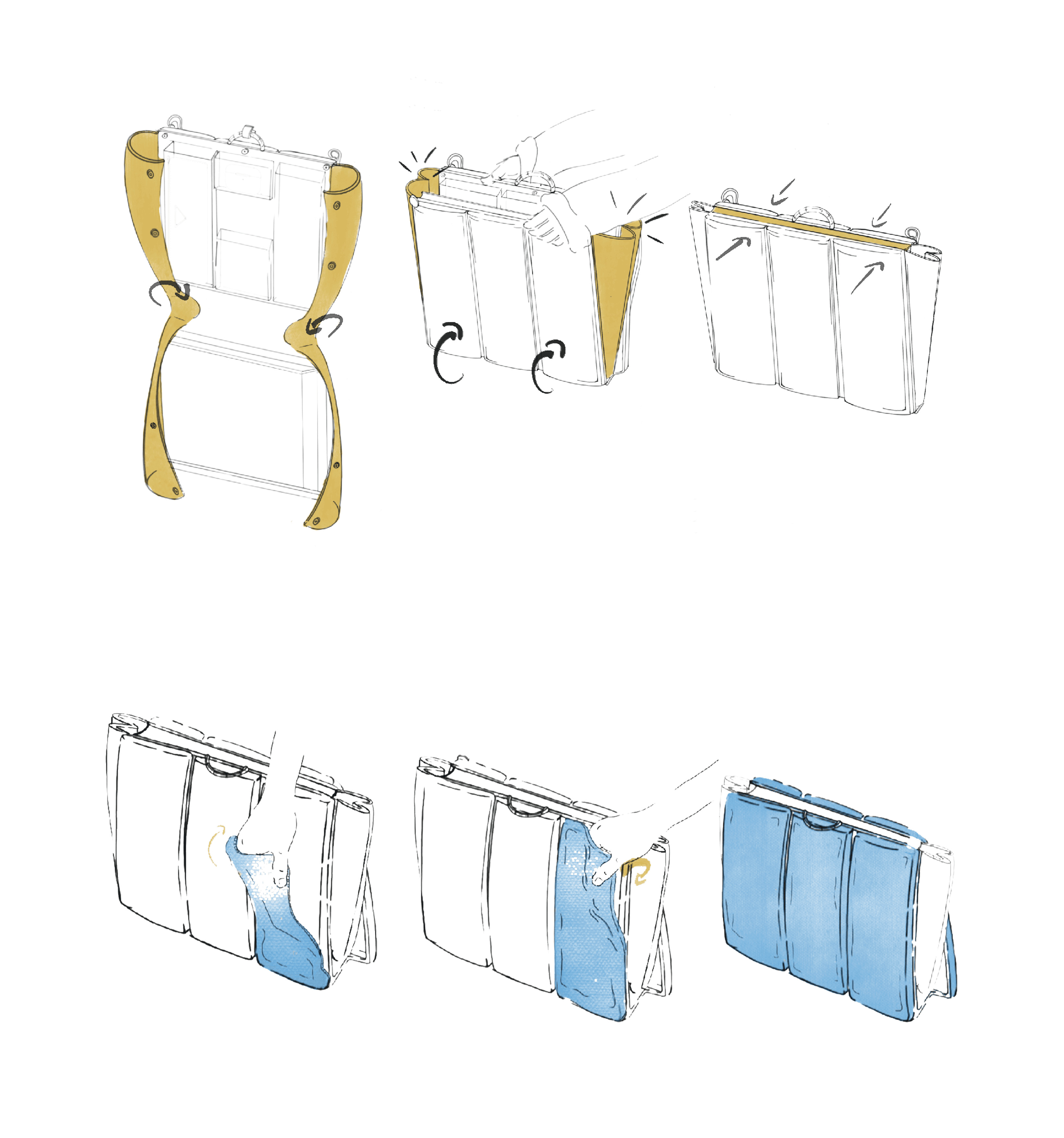
The absence of traditional buttons and zippers in favor of magnetic closures makes the device easier to use for people with dyspraxia.
The external pads, covered in a soft, neutral material, can be customized to respond to different levels of tactile sensitivity through elastic covers made of different materials.

Graphics
The unobtrusive graphic instructions are visible through the transparency of the pockets. This allows the user to choose the ideal arrangement of items, while still allowing for individual freedom of choice and the ability to self-manage the organization of everyday items.
Dexter
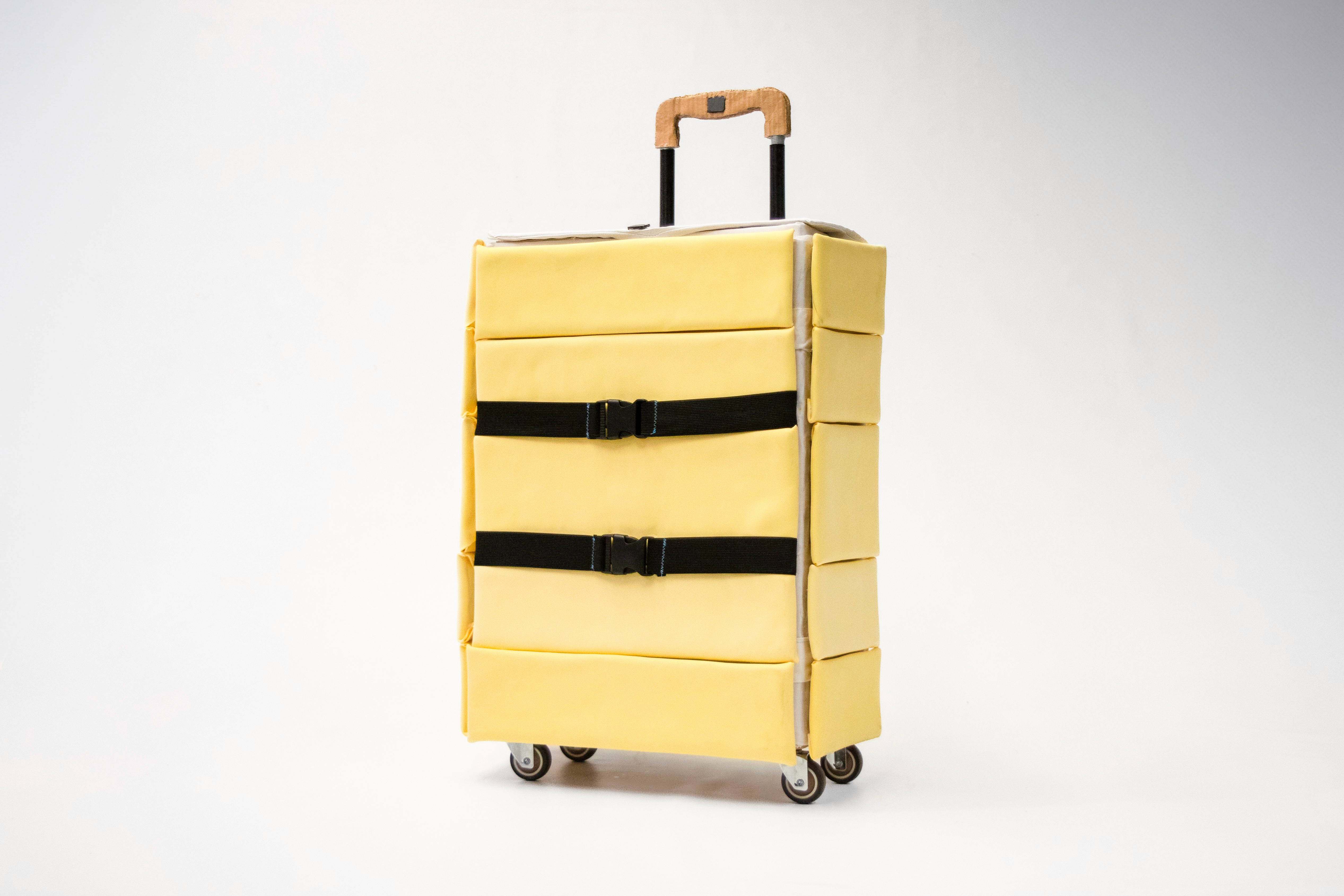
Lay-flat trolley
Features
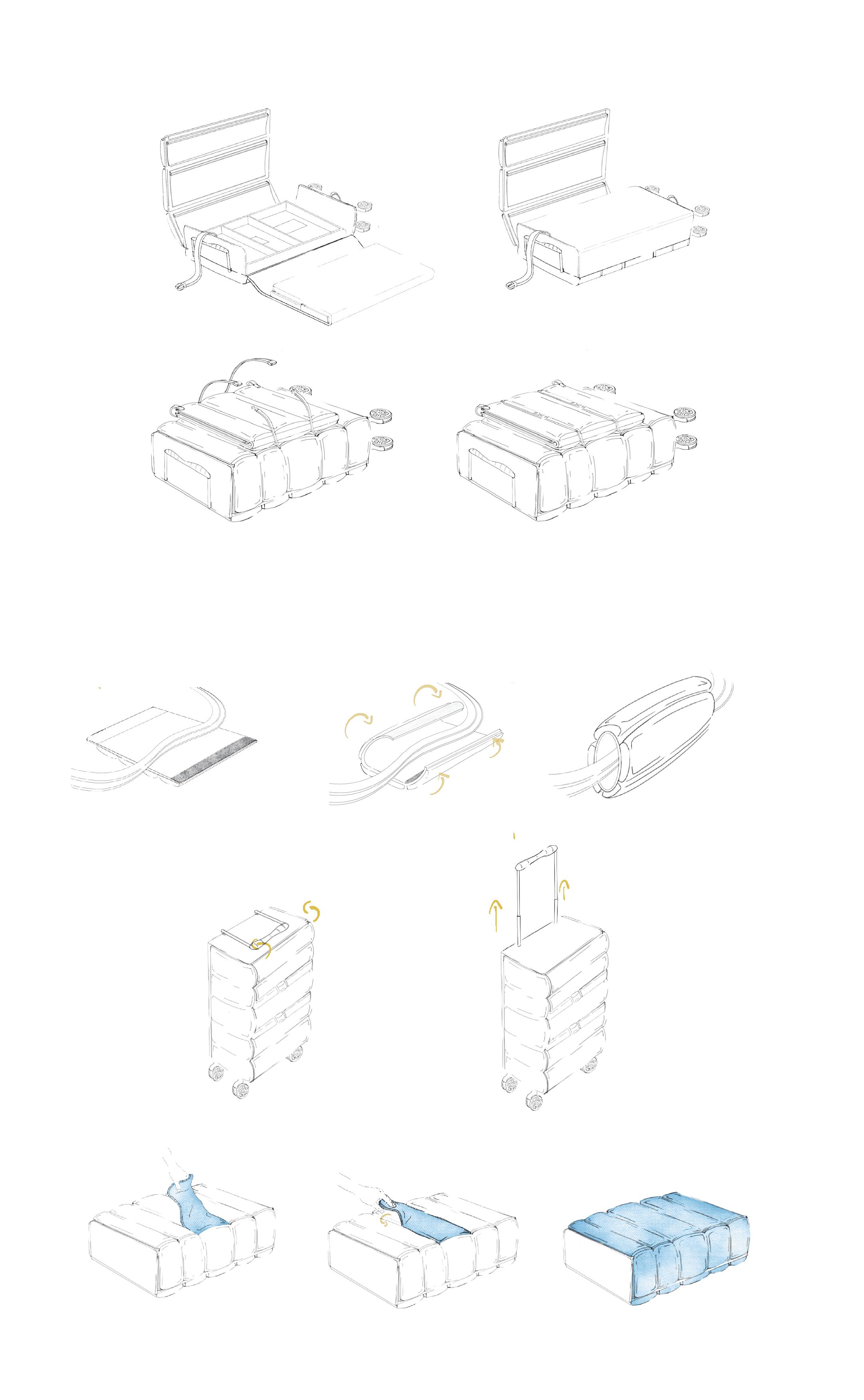
Dexter also features anti-dyspraxia closures: magnets and simple snap buckles overcome the limited accessibility of traditional solutions. Elastic straps ensure structural safety and the ability to integrate Dexter and Sugar.
The shoulder straps, which allow for use as a duffel bag or backpack, feature a padded sleeve for a solid, ergonomic grip.
The handle for using the item as a trolley features two hinges and remains flat, magnetically attached to the top, without taking up space. Once raised, it locks into place and can be extended.
The ability to customize your luggage is also evident on this item.
Graphics
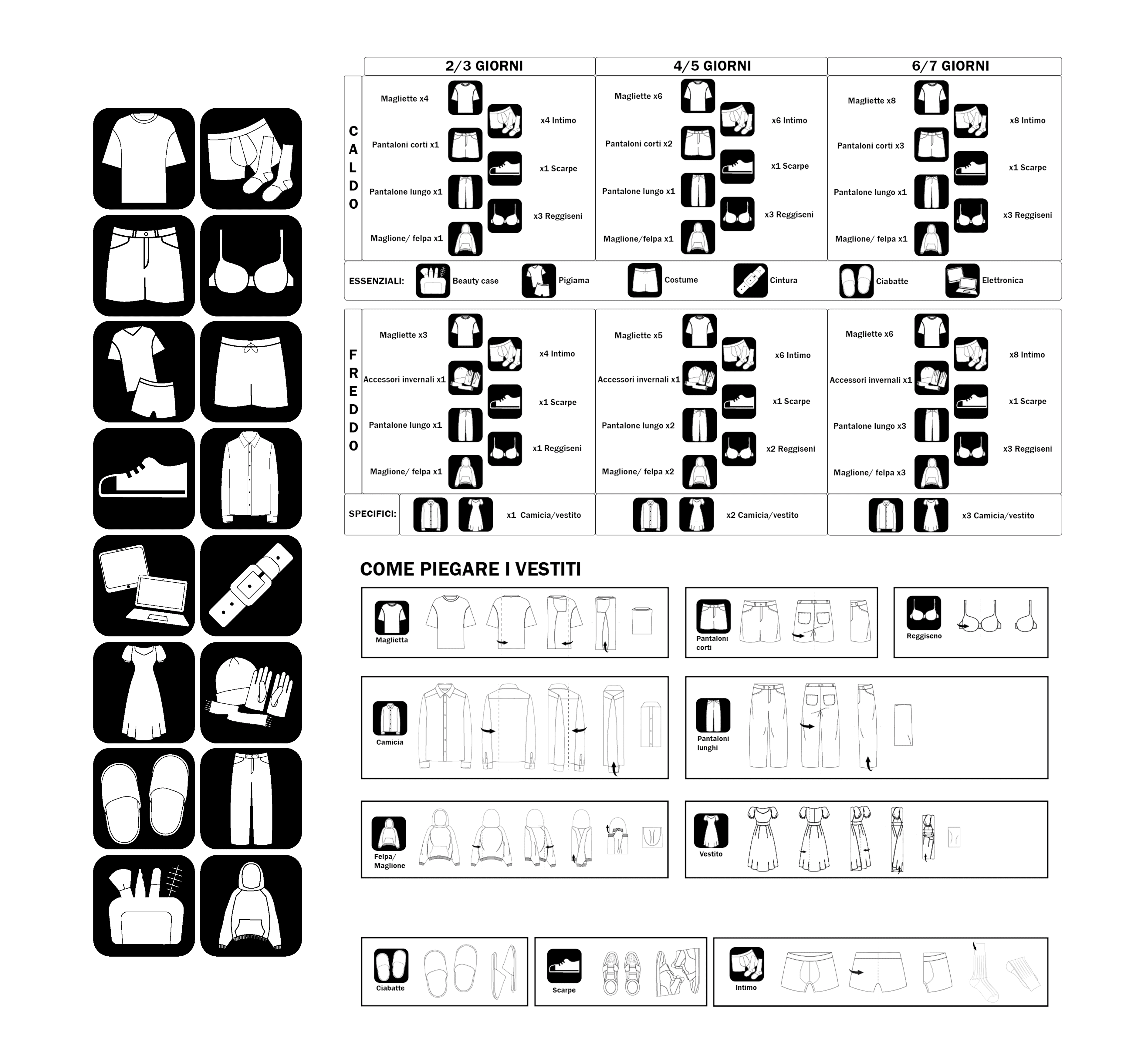
In Dexter, the graphics connect two-dimensionality (print) and three-dimensionality (magnetic patches), promoting guided autonomy.
The internal print includes:
• Illustrated instructions on how to fold items, adding an educational dimension to packing.
• A guide table recommending the number of items to bring based on number of days and season, complemented by iconic magnetic patches that can be applied directly to the pockets.